01 Overview
Intelligent
Vehicle
AI Voice Assistant
What happens when you give a car a voice that actually thinks? Following the ChatGPT launch, I partnered with engineers to prototype a real LLM-integrated in-vehicle AI, testing how conversational AI could transform the way drivers interact with their car.
My Role
Led visual exploration and prototyping, integrating design with an LLM backend for real-time voice interactions.
Outcome
Delivered the company's first functional AI demo. Explored different UI/UX patterns to extract key user insights.
Impact
Inspired executive team's AI strategy. Set foundational reference for future AI initiatives.
02 Background
A New Kind of Intelligence
ChatGPT launched on November 30, 2022. I immediately started asking: what if your car could have this kind of conversation? I partnered with engineers to explore how large language models could enhance the in-vehicle experience through a real working prototype that connects with real vehicle data.
Three questions that drove the exploration
Understanding
How does AI make sense of driving context and user intent in real time?
Trust
How does a driver know what the AI is doing, why it's doing it, and whether it got it right?
Control
How does the driver stay in command when the system's outputs are adaptive and non-deterministic?
03 Demo
Multimodal Intelligent Demo
The prototype demos a range of real use cases: adjusting climate, opening and closing the frunk via voice command, and activating assisted driving, all through natural language. The AI listens, interprets intent, and triggers the corresponding vehicle action in real time.
04 Research
Design Process: Research Foundation
Competitive Analysis
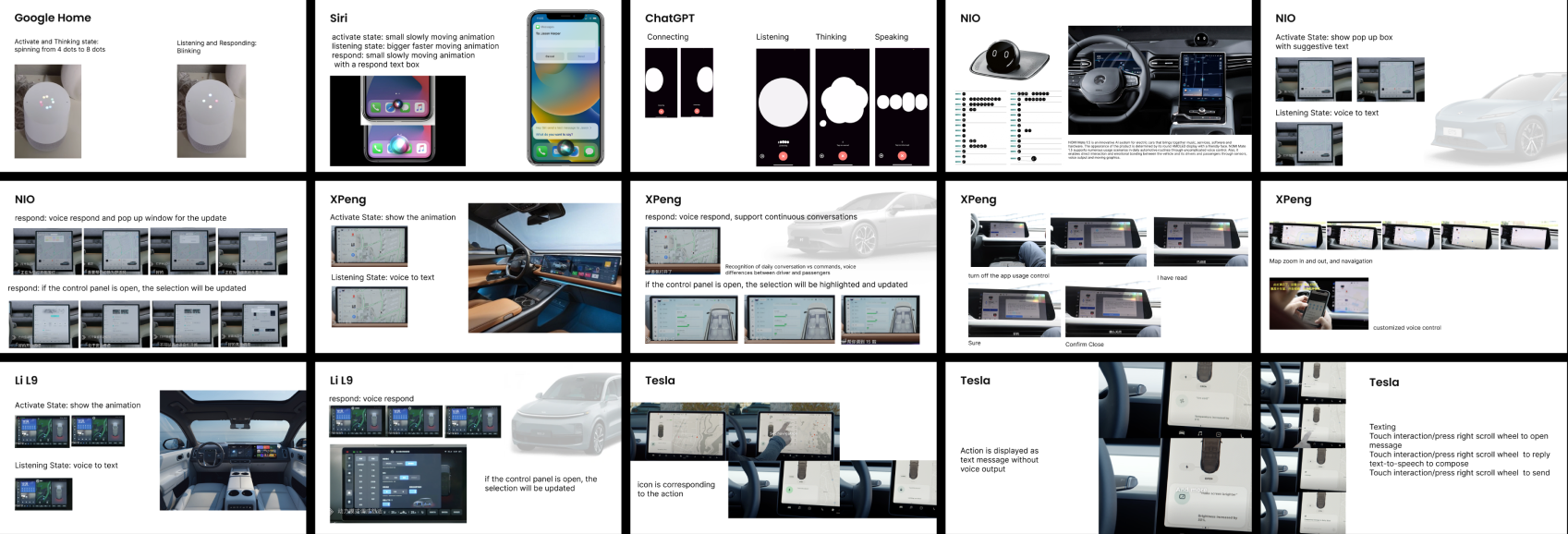
Before designing any visual, I mapped how automotive and consumer voice interfaces handle AI presence. Five patterns emerged consistently across the best products in the space.
Personalized experience
The assistant learns preferences over time, adapting to greetings, shortcuts, and tone.
Always show system state
Ambiguity about what the AI is doing instantly erodes trust. Show it always.
Continuous conversation
Multi-turn dialogue feels natural. Single-turn commands feel robotic and limiting.
Persistent subtle hint
A constant but non-distracting visual cue signals the assistant is always available.
Non-disruptive UX flow
AI cannot hijack the screen or demand attention mid-drive. The UI must stay peripheral.
Literature Review
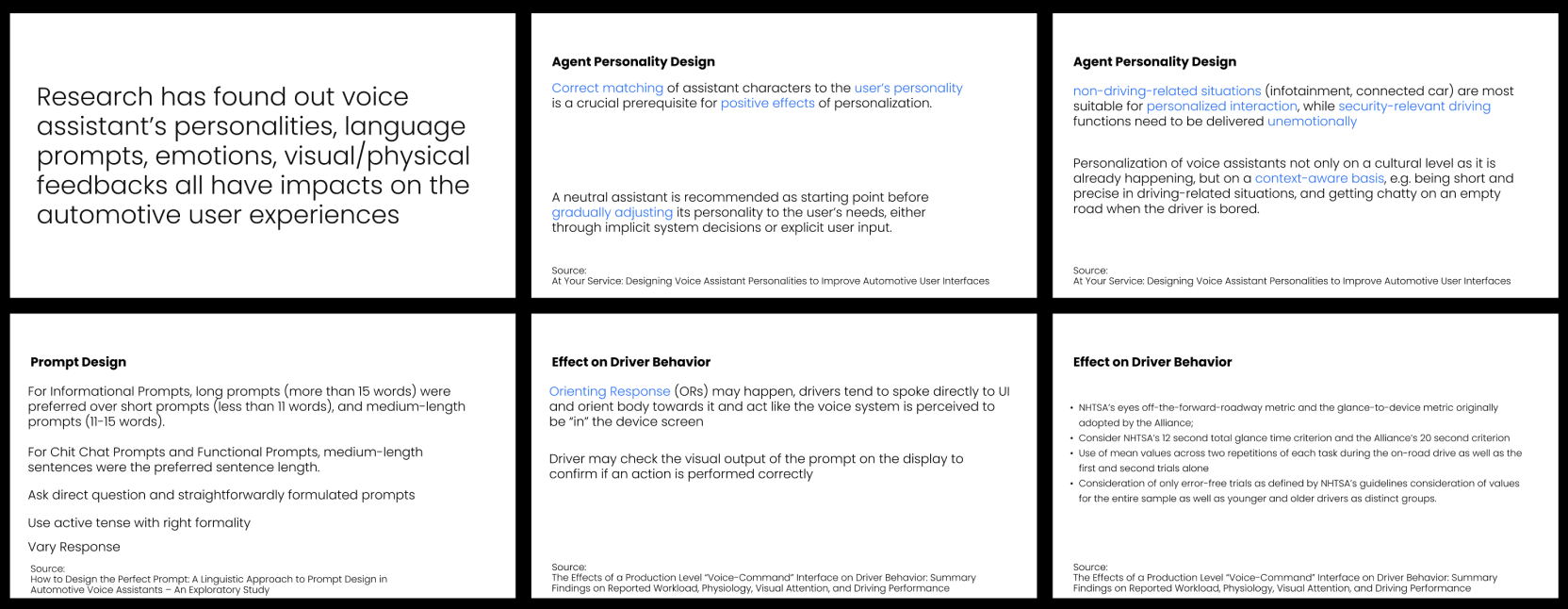
Research confirmed: voice assistant personality, language prompts, emotions, and visual/physical feedback all significantly impact automotive UX. Three themes shaped the design brief.
Agent Personality Design
Trust varies considerably based on how the assistant presents itself, from formal to casual, functional to expressive.
Prompt Design
Specific language patterns significantly improve intent accuracy and user confidence in the system's understanding.
Multimodal Feedback
Visual + audio + haptic feedback in combination consistently outperforms relying on any single channel.
05 Visual Exploration
Three Directions for AI Presence
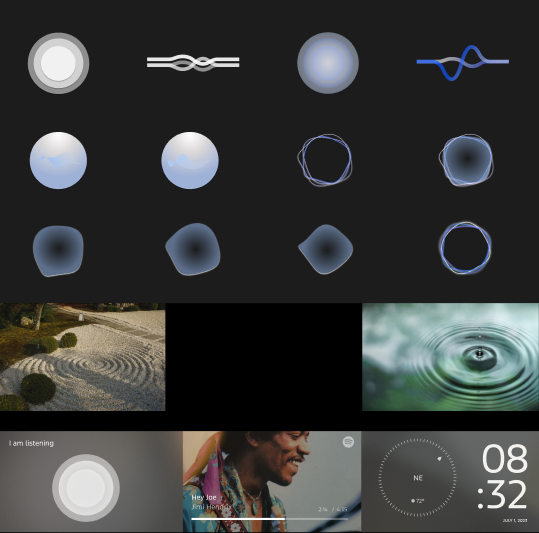
How should AI visually announce itself in a vehicle? I explored three fundamentally different visual languages, each representing a different relationship between driver and AI.
01
Abstract Shapes
Geometric pulses, rings, floating particles. Technical and neutral, signaling system activity without implying agency.
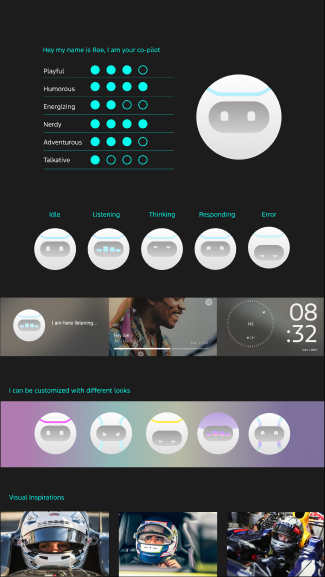
02
Humanized Character
A distinct visual persona with emotional expressiveness. Warm and approachable, signaling relationship and empathy.
03
Cross Fano Expression
Geometric forms derived directly from the vehicle's existing design language. Native, premium, coherent with the HMI.
Cross Fano Expression was selected because the goal of this demo was to explore where AI could exist across the vehicle, not to focus on visual character design. By using a form language already native to the dashboard and HMI, the visual presence stays ambient and unobtrusive, allowing the focus to land on what AI can actually do across climate, vehicle controls, and driving assistance, rather than on how the AI looks or expresses itself.
06 Interaction Flow
Listening. Thinking. Responding.
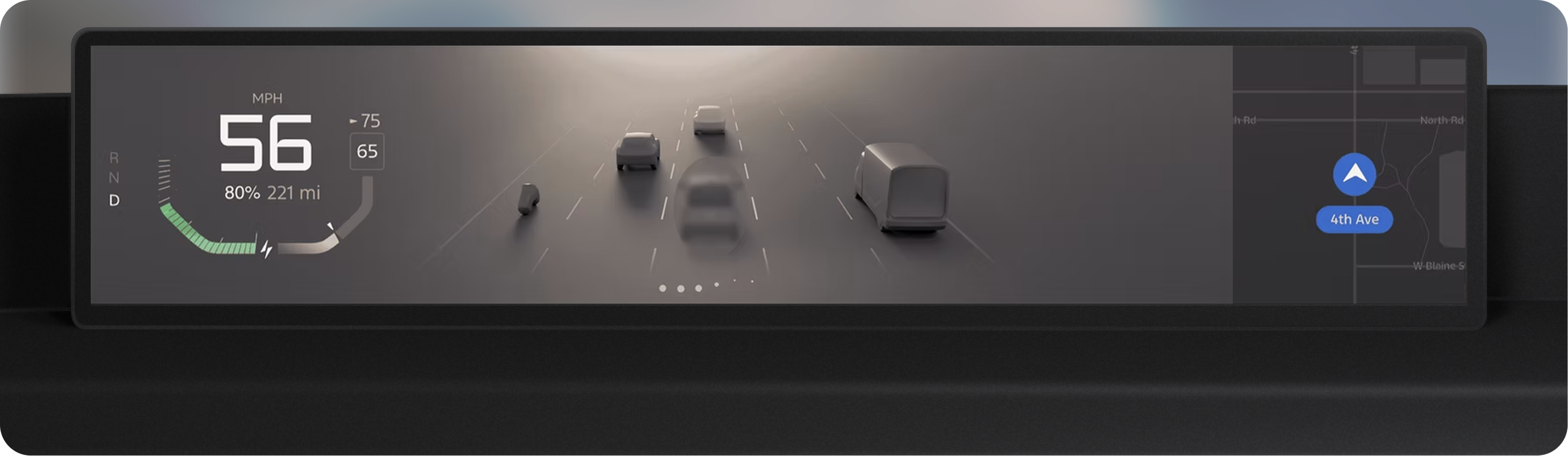
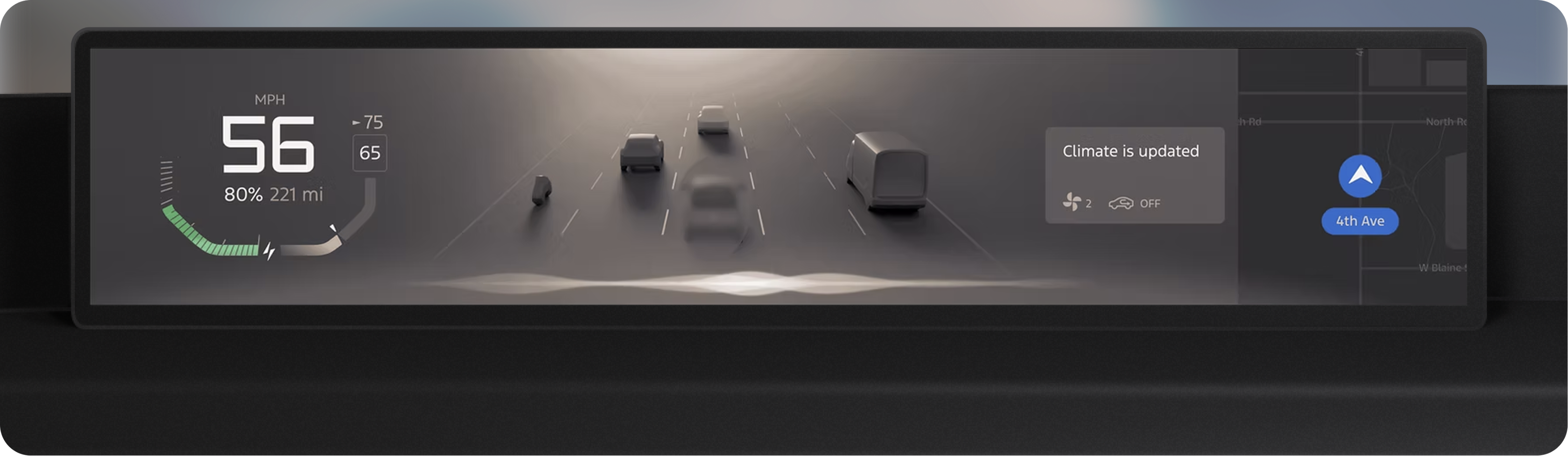
Cross Fano Expression applied to the three-state voice interaction flow. Each state communicates a distinct phase of the AI's process, readable at a glance without demanding visual attention from the driver.
Driver activates voice. AI waits for speech. A subtle animation signals the system is open and attentive, without visual overload.
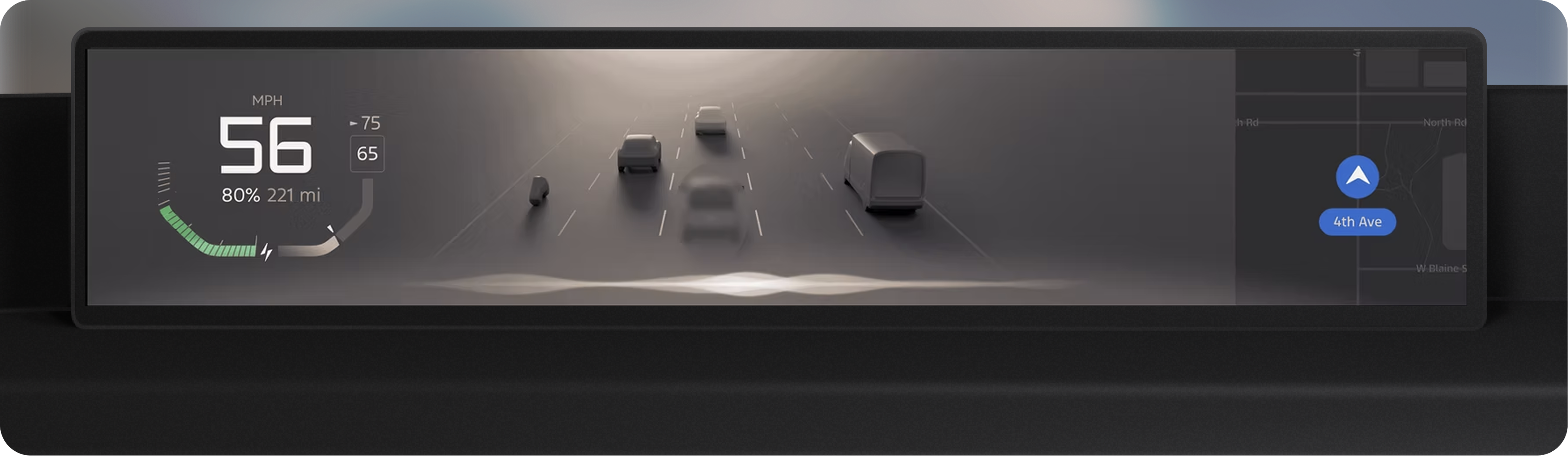
Speech captured. LLM processing. A distinct visual cue signals the system is working, setting expectations before the response arrives.
AI reply delivered. System change reflected in the HMI. Confirmation visible without requiring the driver to look away from the road.
07 AI Challenge
Designing for Non-Deterministic Outputs
Traditional design: input → deterministic output.
AI design: input → adaptive, contextual, non-deterministic response.
This distinction creates a fundamental UX challenge. The driver doesn't know in advance what the AI will do, and neither does the designer. Two questions defined this problem space:
How do we effectively communicate system changes when outputs are non-deterministic?
How do we help users set the right expectations and still feel in control?
Example scenario
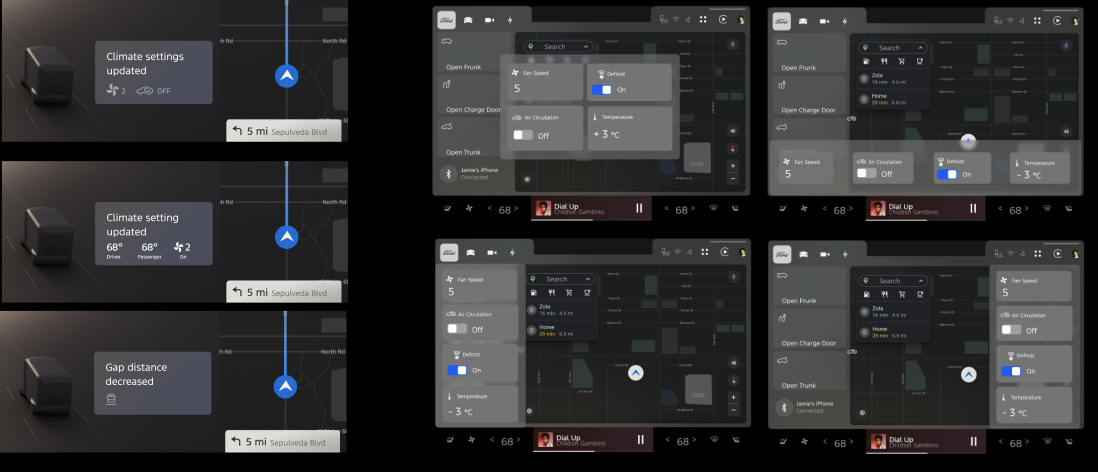
Exploring UI variants that communicate adaptive AI actions without overwhelming the driver or creating uncertainty.
08 Key Takeaway
Composable AI Design
Design systems need to evolve from static components to atomic, composable modules.
Features become building blocks that AI combines dynamically to enable personalized, context-aware experiences.
This concepting work directly influenced Ford's executive AI strategy. The patterns and tensions discovered here, including trust, transparency, and non-determinism, became the vocabulary for how the team approached subsequent AI initiatives across the vehicle experience.