Health Tech · AI Product
Porcupine
Product Designer
🏆 1st Place & YouTube Health Innovation Prize, NASEM Hackathon
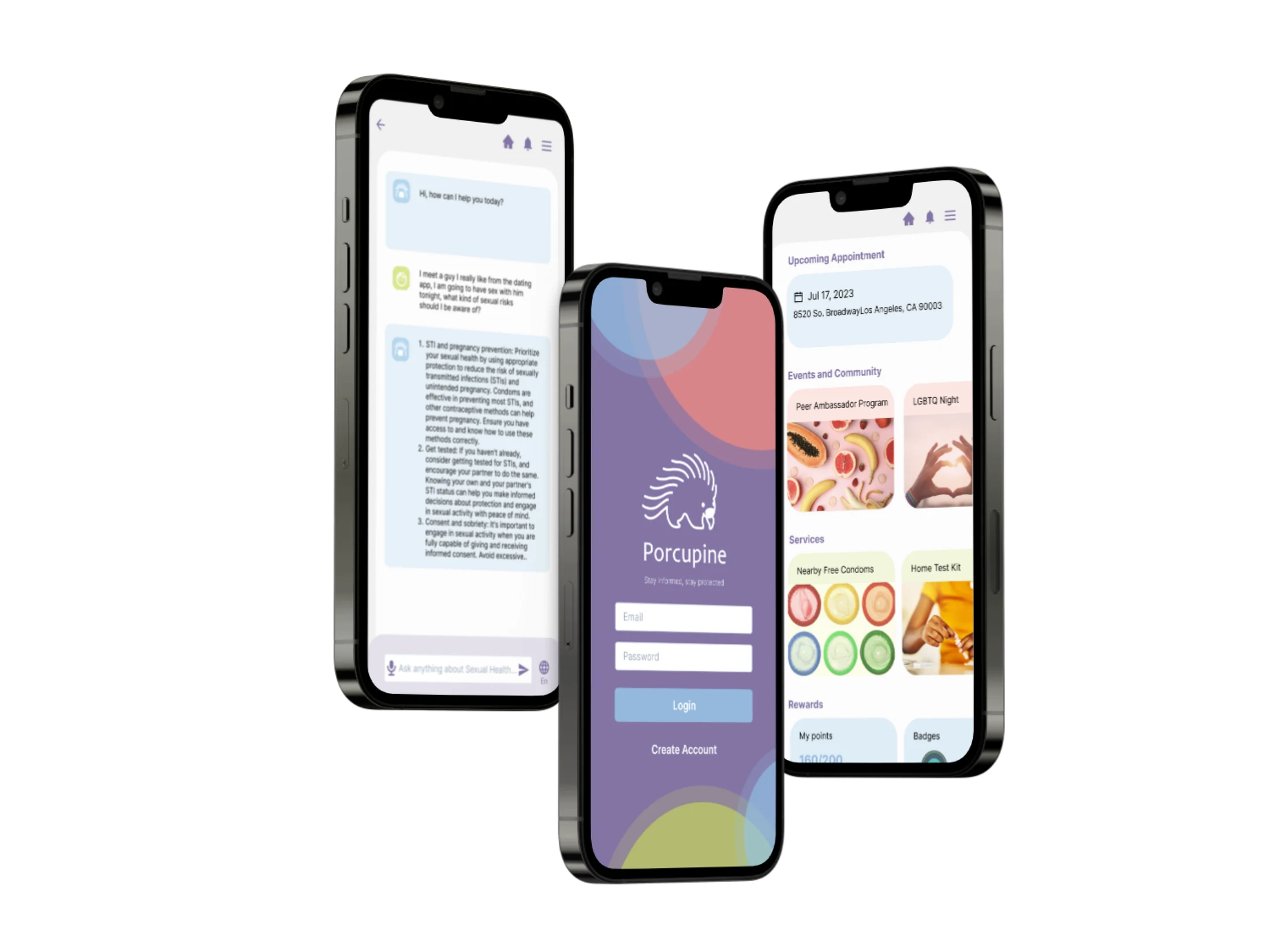
Porcupine is an AI-powered, user-centered application that helps people get better access to sexual health information, lowers the barrier and eases the stress of the test booking process, improves the digital care pathway, and provides a data collection model for accurate, real-time analytics.
Do you know?
One in five people in the United States had a sexually transmitted infection on any given day in 2018, resulting in about 68 million reported infections (National Academies Press). From 2020 to 2021, reported cases of chlamydia, gonorrhea, and syphilis rose to 2.5 million, according to CDC surveillance data.
01 Personalized From Day One
Tailored to who you are
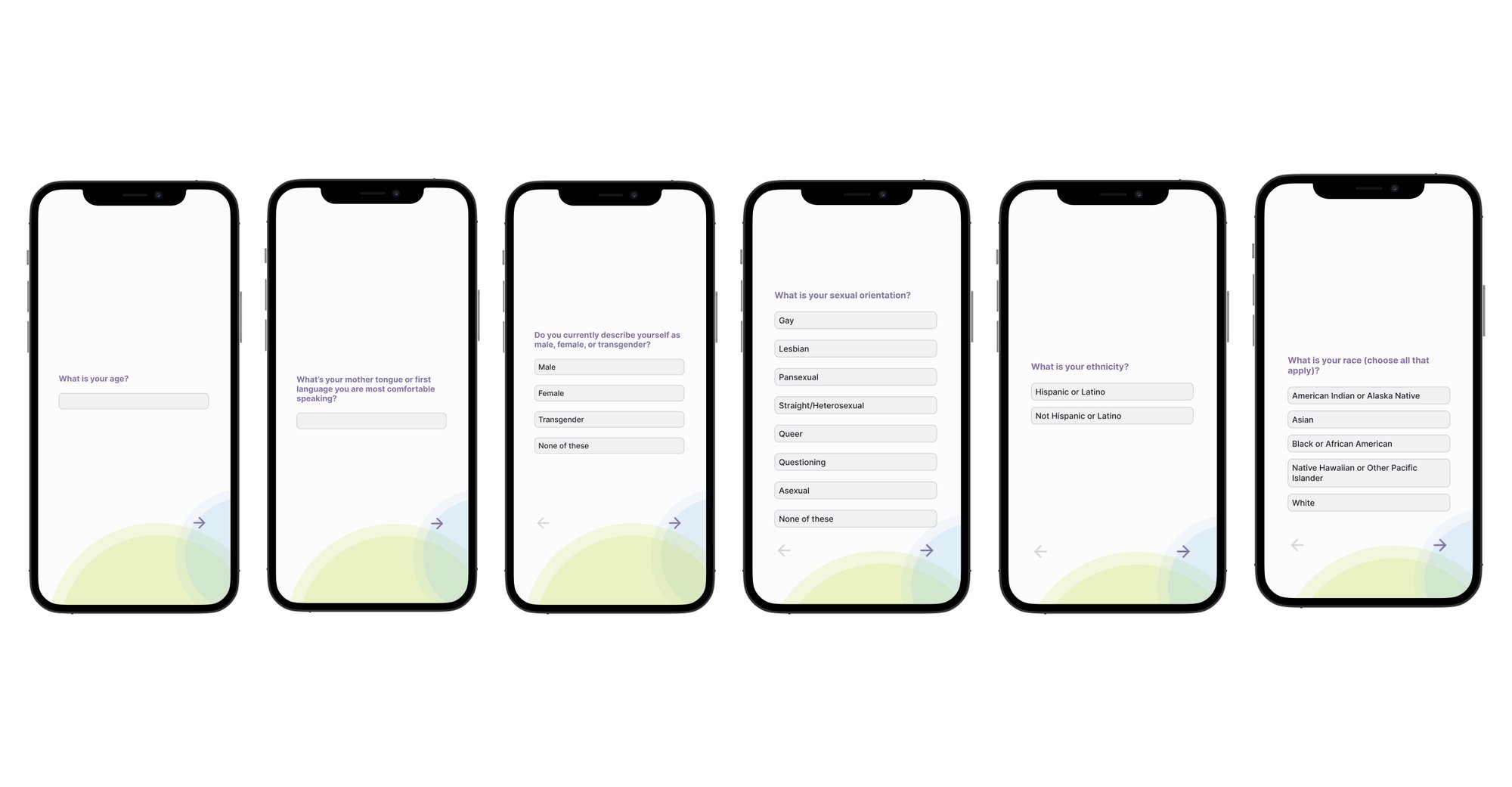
Onboarding asks about age, language, gender, sexual orientation, ethnicity, and race, so every answer, provider match, and resource the app surfaces afterward is tailored to that profile rather than generic advice.
02 A Reason to Come Back
Community, services, and rewards in one home screen
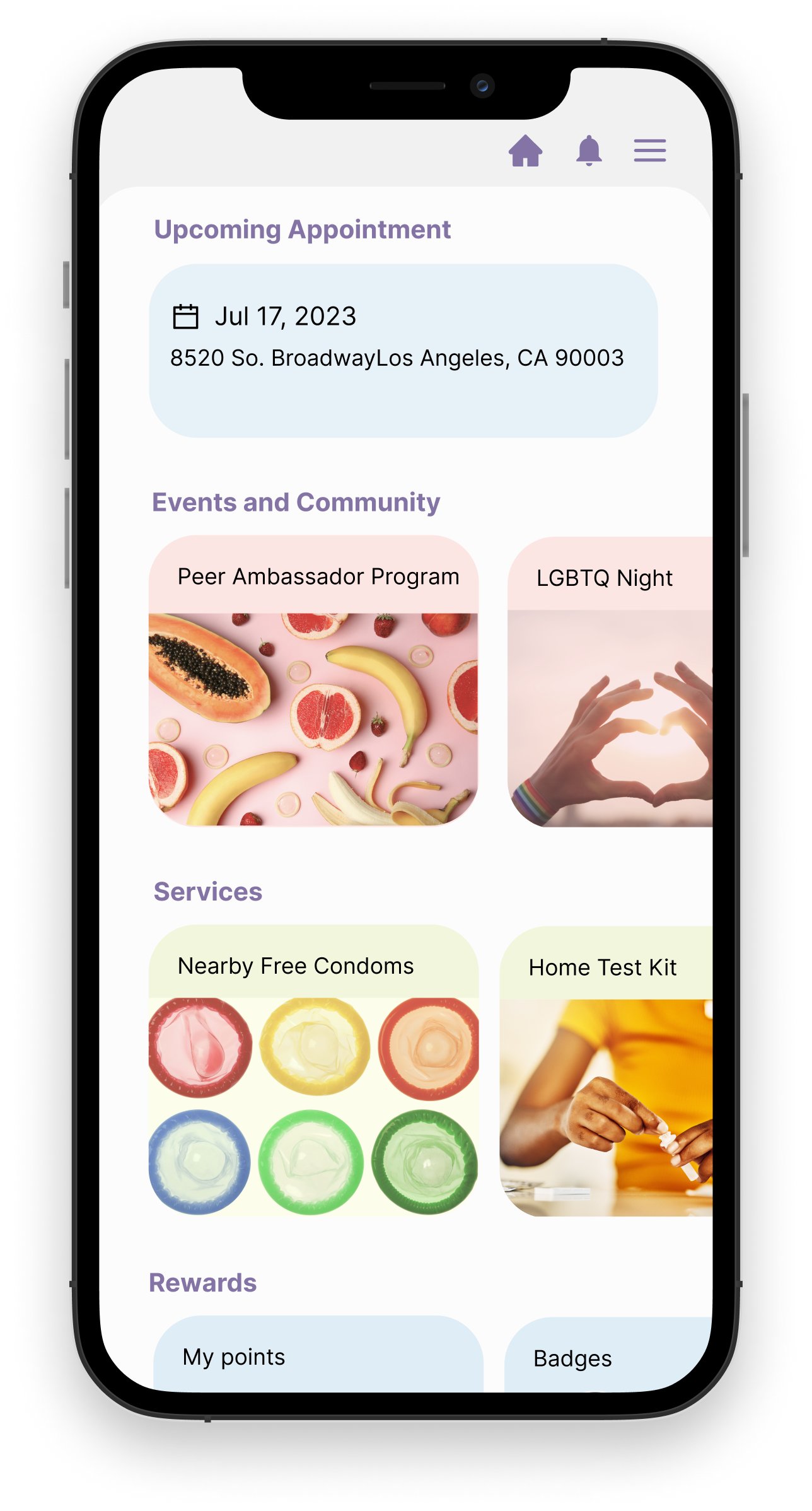
The home screen surfaces upcoming appointments, community events like Peer Ambassador programs and LGBTQ nights, and services like free condoms and home test kits, all reinforced by a points-and-badges system for engaging with resources, completing testing, and keeping up with regular checkups.
03 Ask Anything, Privately
A judgment-free AI chatbot
A tailored AI chatbot answers sexual health questions with responses shaped by the user's own profile, so someone can ask about symptoms or risk in the moment instead of waiting for an appointment or searching for answers alone.

04 Finding Care That Fits
Search built on what actually matters to patients
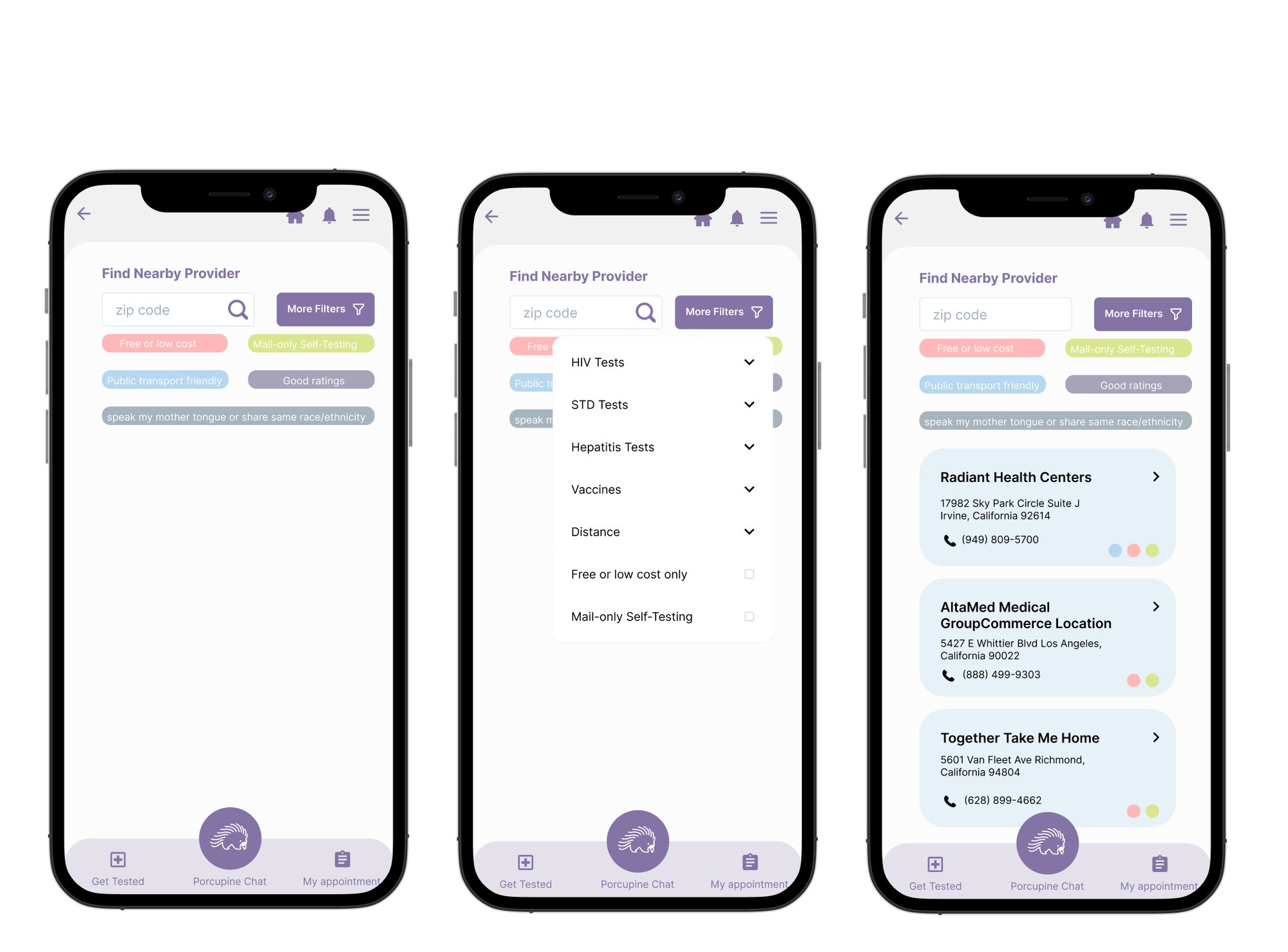
Building on the CDC's GetTested site, provider search adds filters for ratings, language support, public transportation access, and whether a provider shares the patient's language or race and ethnicity, plus free-or-low-cost and mail-only self-testing options.
05 Booking Without the Stress
A stress-free path from search to appointment
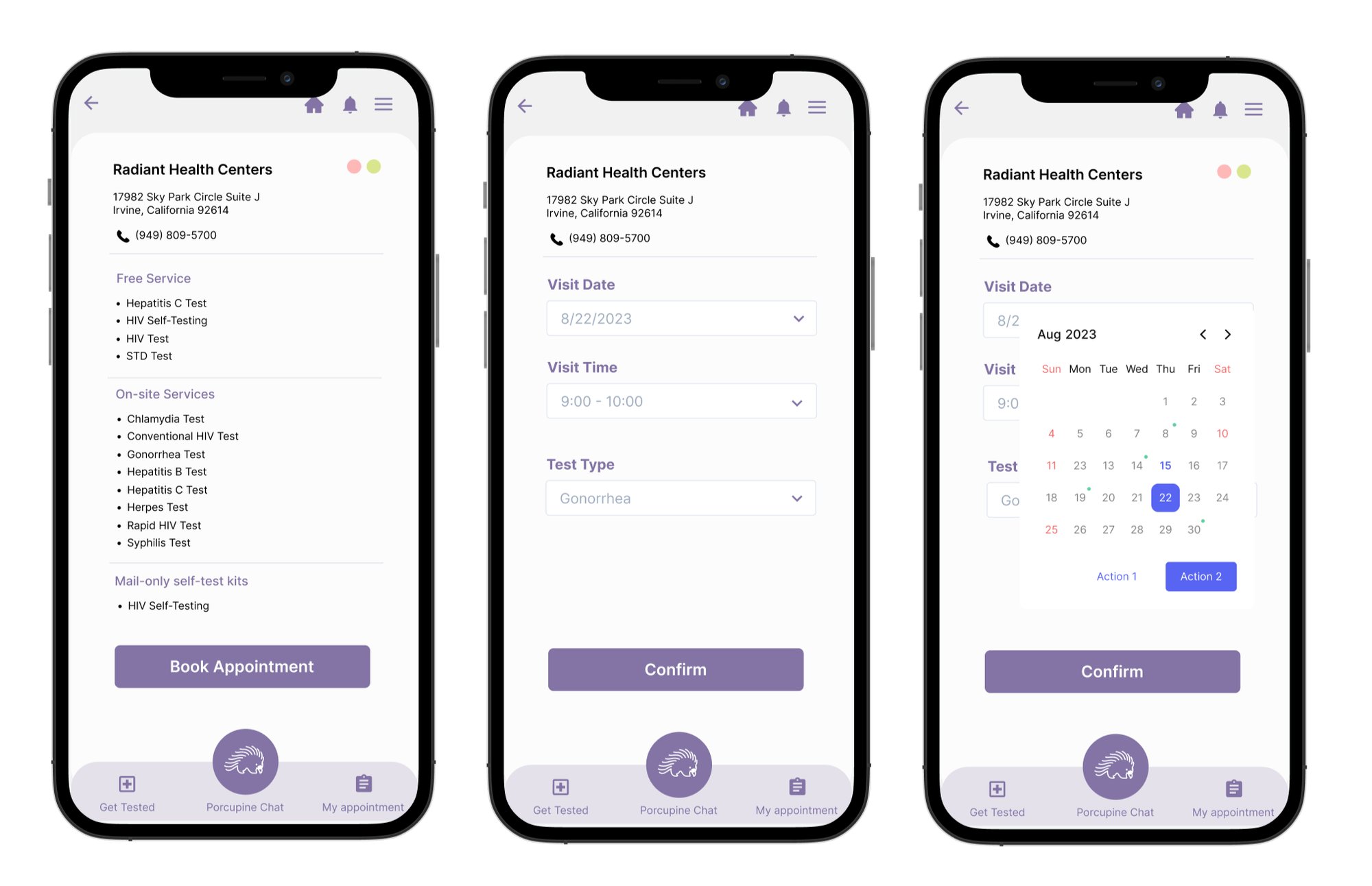
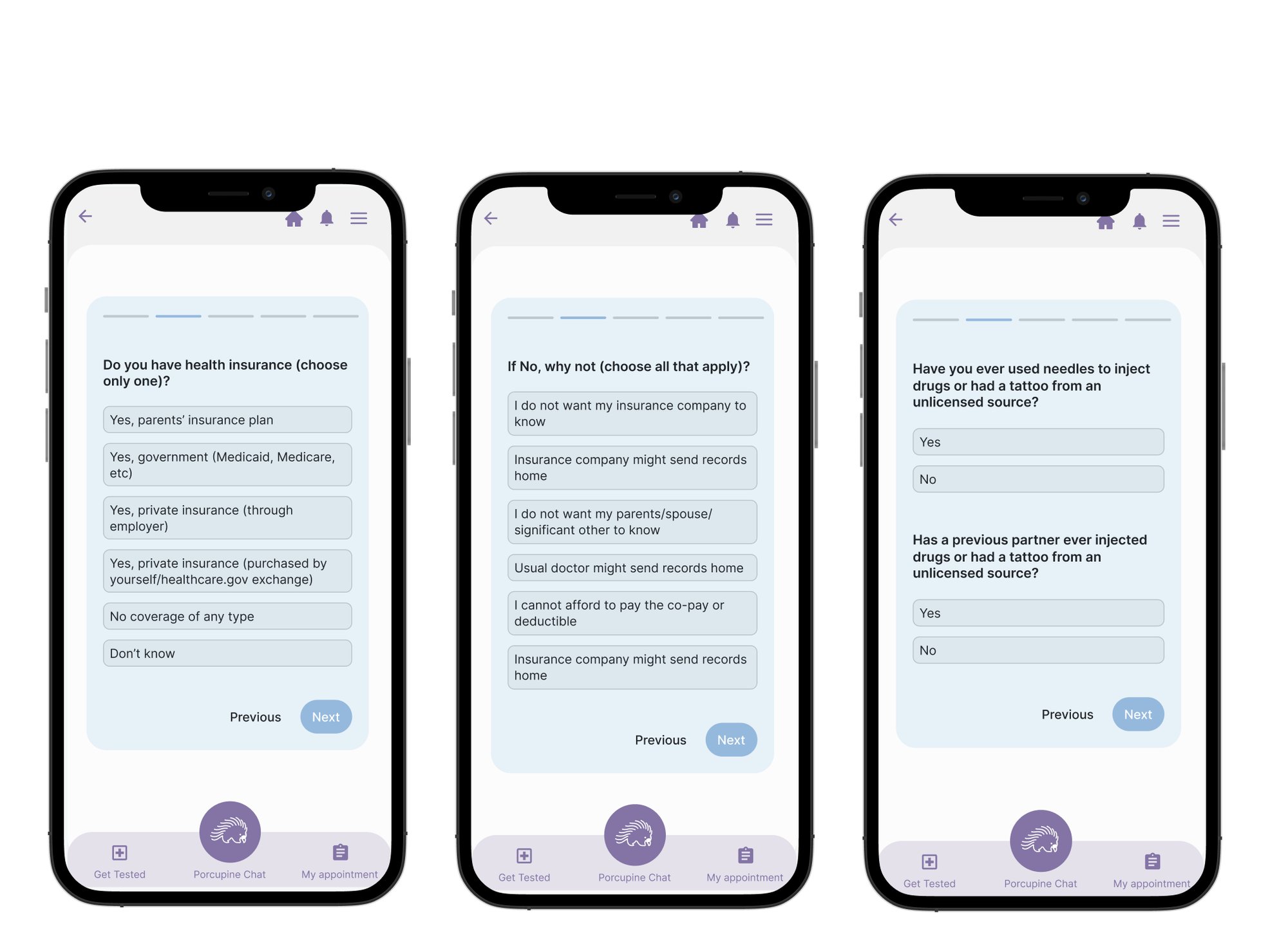
Booking a visit, choosing a date, time, and test type, takes a few taps. Beforehand, a smart survey pre-fills the intake questions a clinic would otherwise ask onsite, protecting patient privacy while giving clinics a streamlined template for plotting clinical insights and cutting down on manual entry and reporting delays.
06 Test Without the Paperwork
A private code instead of a personal file
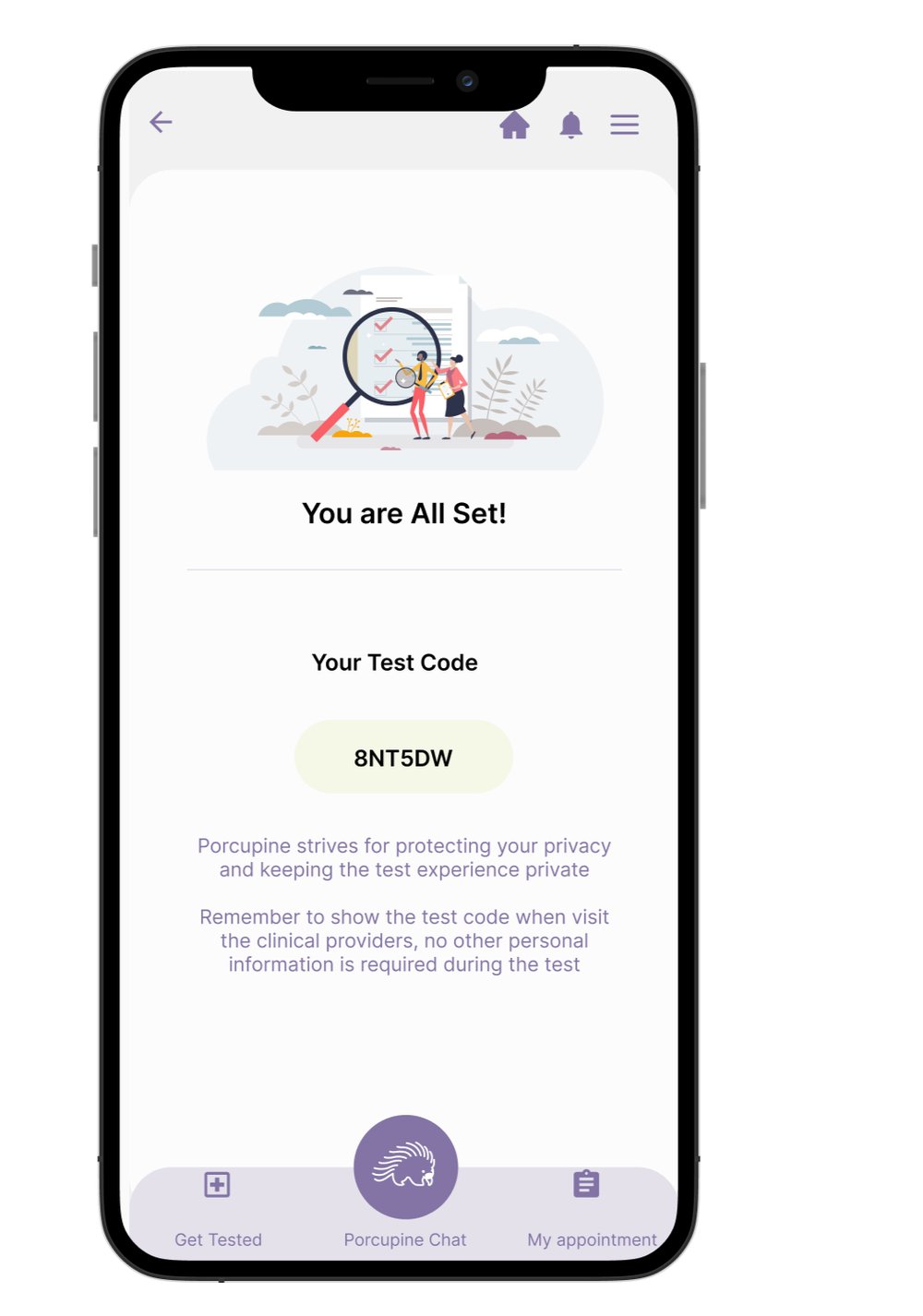
Once booked, patients get a unique test code. They can walk into the clinic and get tested without handing over any additional personal details onsite, keeping the visit itself private.
07 Data Clinicians Can Trust
Real-time surveillance for researchers, without the risk
The same standardized intake data powers a clinical side of the app: a real-time case map, CDC case-rate monitoring by region, and trend charts covering demographics, appointment-to-result turnaround, and even AI-driven sentiment analysis on chat conversations, so researchers can spot patterns as they emerge instead of waiting on delayed reporting.

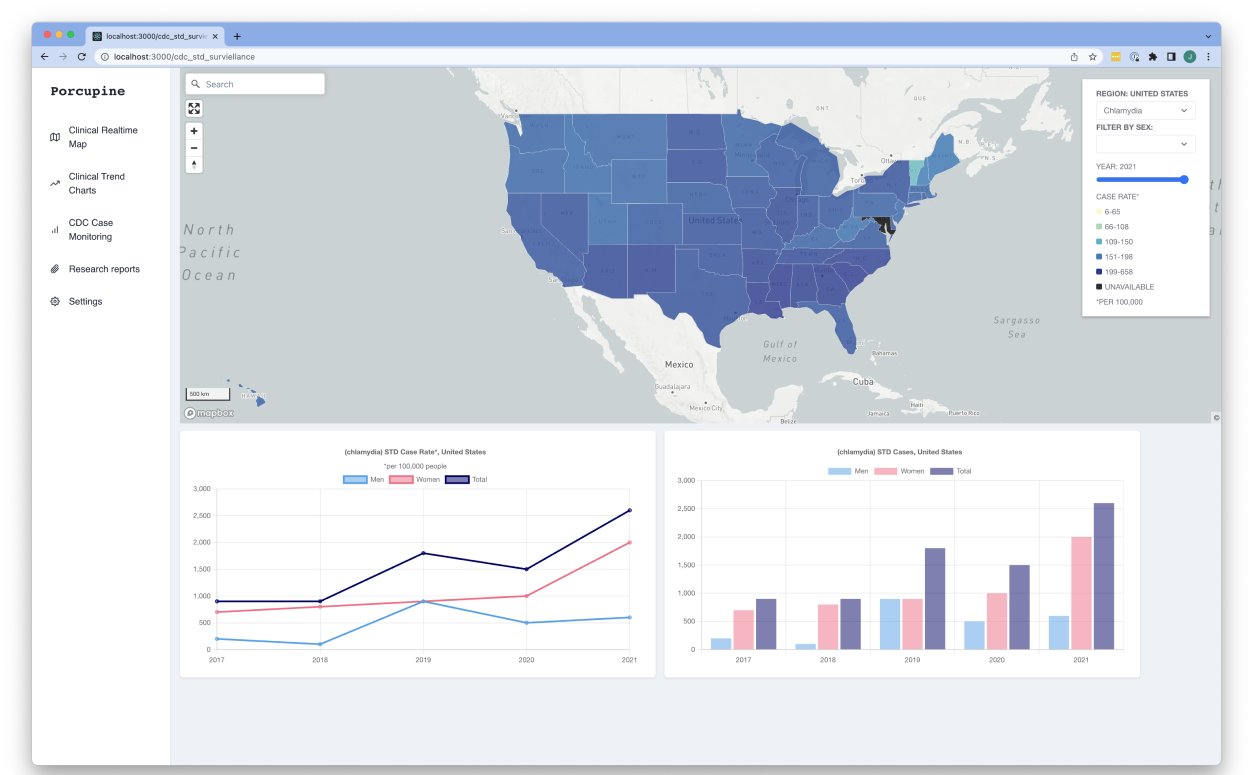
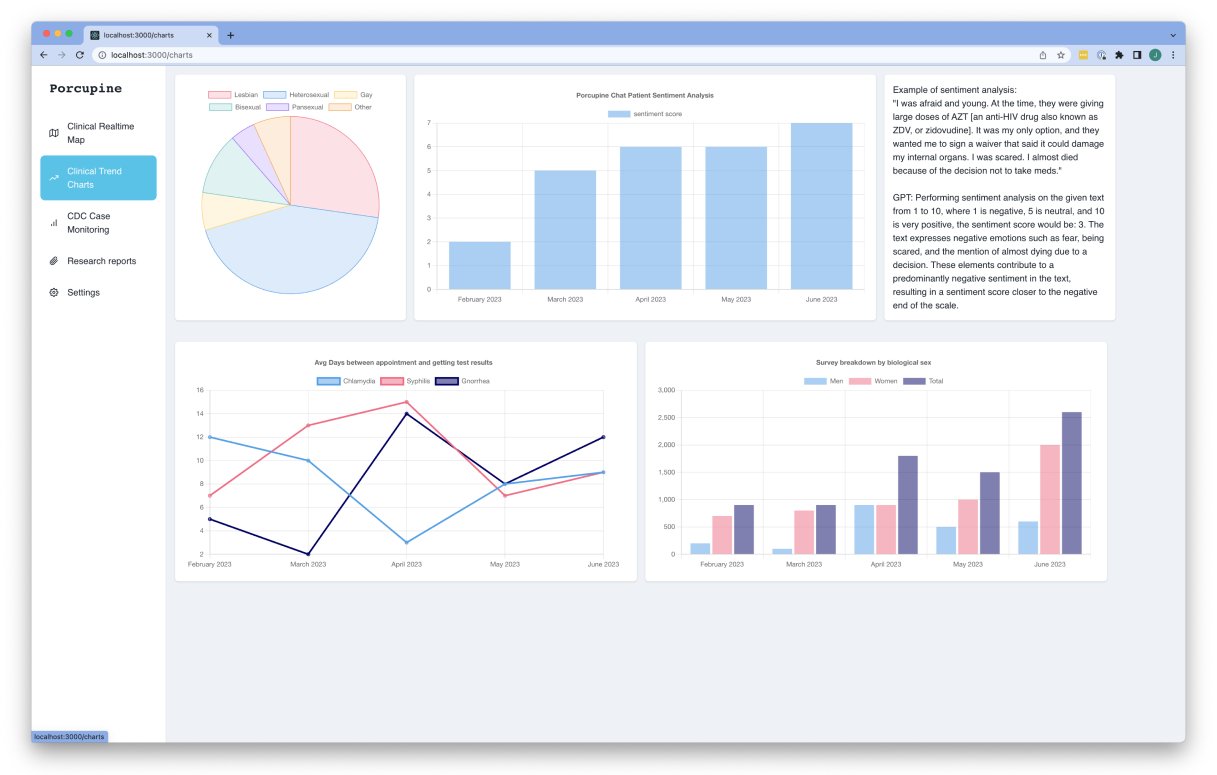
Every insight here runs on synthetic data: a machine learning model trained on real patient data that generates new data retaining the same characteristics, correlations, and distributions, but that is statistically indistinguishable from and untraceable to any real person. Researchers get the same predictive value as the real dataset, and patients keep full confidentiality.
08 Porcupine in News
Winner, Tech & Media Solutions to Reduce STIs Hackathon
Porcupine won 1st place and the YouTube Health Innovation Prize at the National Academies of Sciences, Engineering, and Medicine's hackathon for tech and media solutions to reduce sexually transmitted infections, held at the Beckman Center in Irvine, California.


Porcupine started as a two-day hackathon build with Jimmy Wang. Its core idea, that better data collection and better patient experience can reinforce each other, still shapes how I think about health tech today.
← Back to Playground